

What Is The Makeup Of A Family Tree
I recently received an interesting question from a reader (see this annotate) about 23andMe's Relative Finder, and idea it would be worth sharing the question and my answer with all my readers.
The Question:
I'chiliad a human being who recently took a 23andMe examination, and I have a question well-nigh Relative Finder. Another man who I match on 36 of 37 Y-DNA markers via Family unit Tree DNA as well took a 23andMe test. We believe that we are tertiary cousins, just this private does not prove upwards as related in Relative Finder, nor does he show any similarities in the Family Inheritance department. Does this mean that we are not related at all?
The Answer
If two individuals do non share any DNA in the Family Inheritance section of 23andMe or do not appear as relatives in Relative Finder or a people check if you lot look online (see here), this admittedly does not mean that they are not or cannot be relatives. It does suggest, nonetheless, that the two individuals might not share any Dna. Although your Y-Dna exam suggests that you share a recent mutual male ancestor, it appears that apart from your Y chromosomes you lot do not share any other DNA.
Dna is randomly passed down from generation to generation. A parent does not pass on their entire genetic makeup to a kid; as a upshot, bits and pieces of Deoxyribonucleic acid are lost in each generation.
Cousins will just share DNA if they happen to accept randomly inherited that Deoxyribonucleic acid from their shared ancestors. With each generation that separates the cousins, the probability that they share Dna decreases, because with every generation it is more likely that they will not inherit DNA from their ever-more-remote shared ancestors.
Third cousins, for example, share just 2 of their 16 ancestors at 4 generations. In this example, it appears that those two ancestors did not contribute an identical segment to both you and your third cousin. Interestingly, information technology is possible that both you lot and your cousin have segments of DNA from these ancestors, but they wouldn't bear witness up as a friction match in Family Inheritance or Relative Finder unless they were the same segment of DNA.
Too go on in heed that a 23andMe test is simply comparing those sections of the Deoxyribonucleic acid that are examined by the test; a whole-genome test, currently not available to consumers (at to the lowest degree at an affordable toll), is the only test that can compare an individual's entire DNA makeup to another'southward.
Two Family Copse
In reality, everyone has 2 family trees. The commencement is a Genealogical Tree, which is every ancestor in history that had a child who had a child who had a kid that ultimately led to y'all. Every determination made by every person in that tree contributed to who and what you are today.
All the same, not every person in that tree contributed a segment of your Dna sequence (considering of random inheritance, as discussed to a higher place). As a consequence, we have a 2d family tree – a Genetic Tree – which is a tree that contains only those ancestors who contributed to our DNA. No one has however been able to construct their Genetic Tree, but soon it will be a reality thanks to advances in genetic sequencing and comparison such Relative Finder. These tools are using relatedness between people living today to deduce the inheritance of Deoxyribonucleic acid from people who accept been dead for centuries.
I have many questions almost Genetic Trees that I'm looking forward to answering with new tools in the future, including the following:
- At 10 generations, I have approximately 1024 ancestors (although I know there is some overlap). How many of these ancestors are part of my Genetic Tree? Is it a very small number? A surprisingly large number?
- What percentage, on average, of an individual's genealogical tree at X generations is part of their genetic tree?
What questions about Genetic Trees can you come up with?
EDIT (22 September 2013): I'thousand adding the figures below to further assistance people understand the concept of a Genealogical Family unit Tree versus the Genetic Family Tree. Note that the Genetic Family Tree illustrates a concept rather than an exact representation of someone'southward actual genetic family tree. The Genealogical Family Tree contains ALL of your biological ancestors. Y'all know that there is a name that goes in EVERY field, fifty-fifty if you don't know the proper noun:
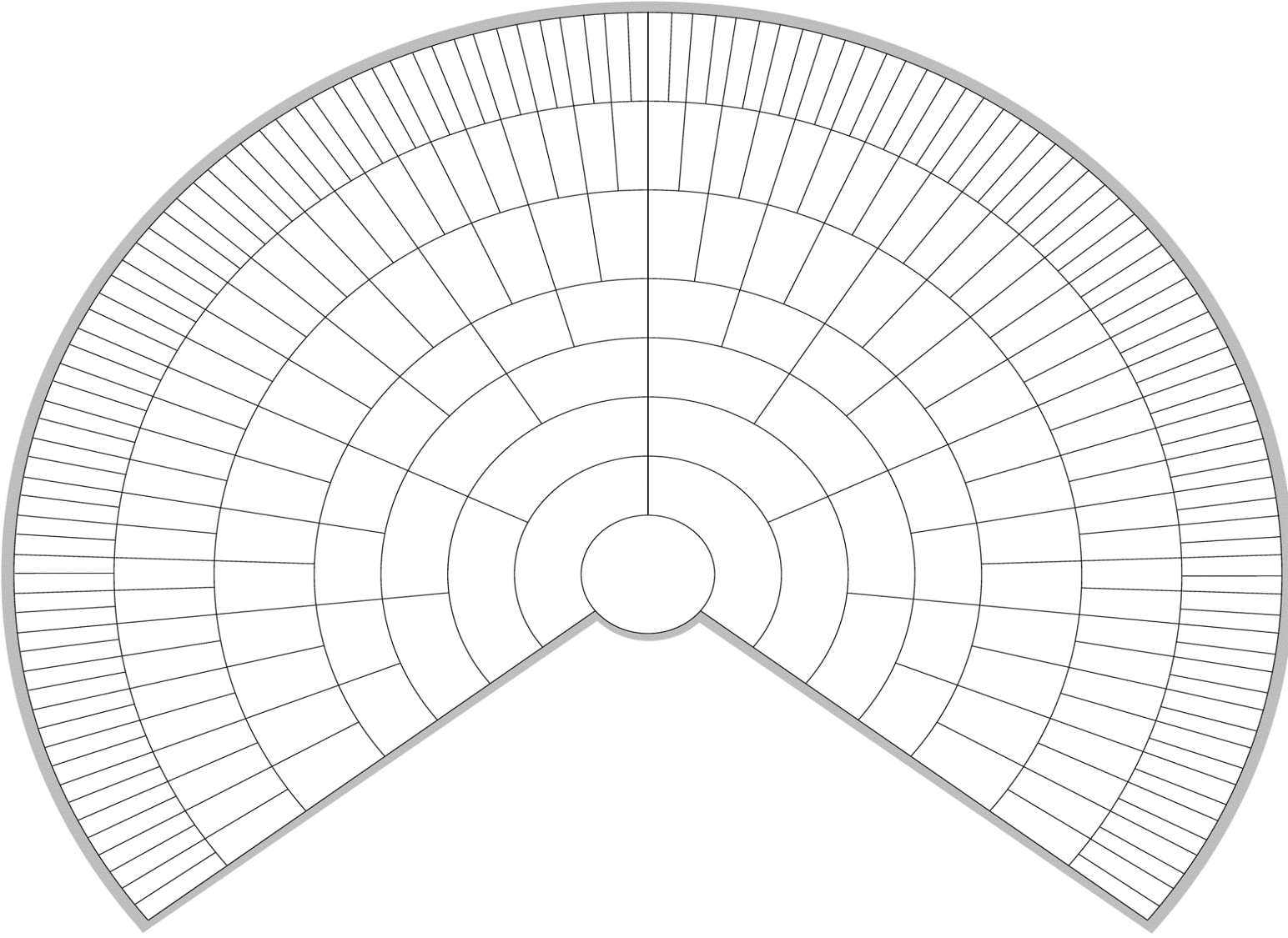
In dissimilarity, a Genetic Family Tree contains a small subset of your biological ancestors (where ancestors that DID provide Deoxyribonucleic acid to your genome are shaded in greyness):
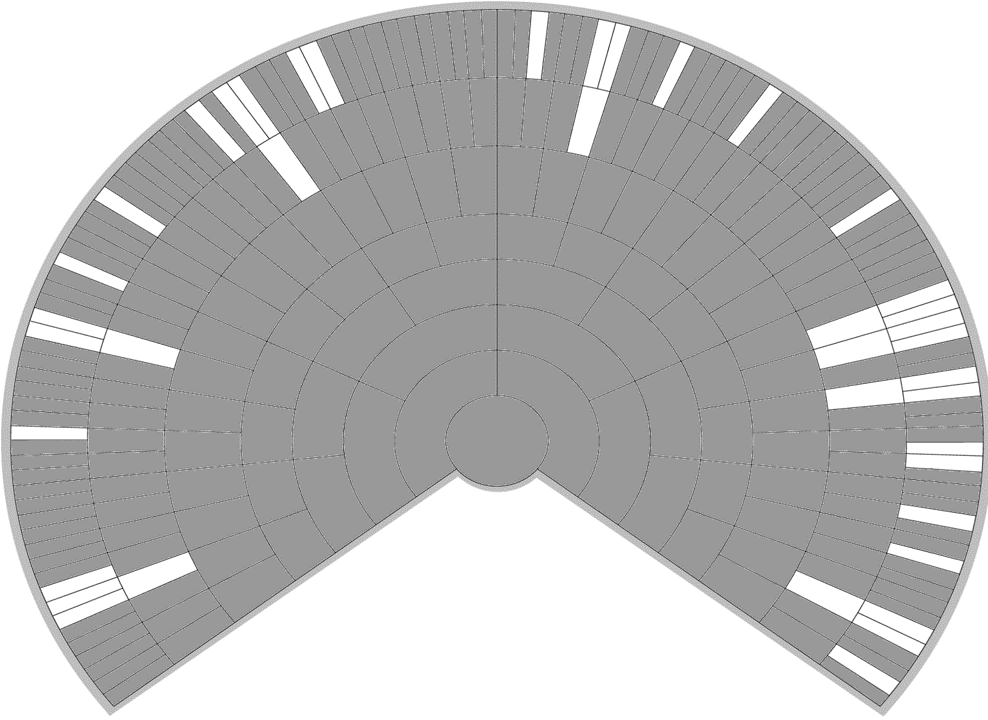
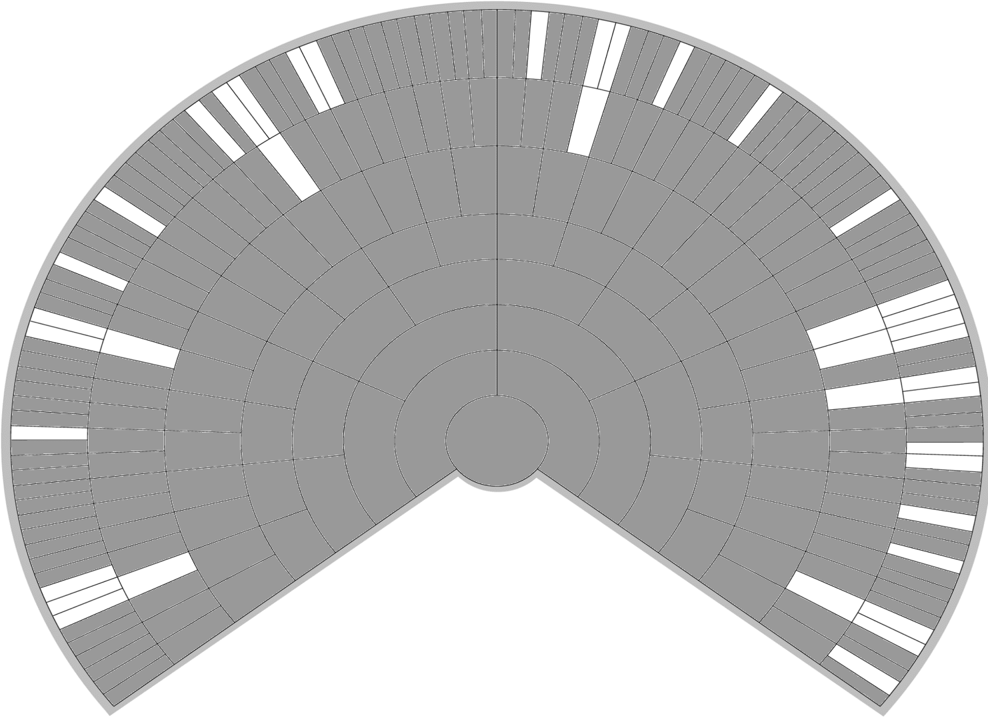
Due to the nature of the Genealogical versus the Genetic Family Tree, unabridged populations, ancestors, and ethnicities are regularly lost entirely from your DNA! For example, in the following example of a Genetic Family Tree, the ancestors in bluish are not represented in the test taker'south DNA. Equally a outcome, the exam taker will not take direct matches through those ancestors, and any ethnicity results won't include that ancestor (and the same is true for ALL the ancestors in white):
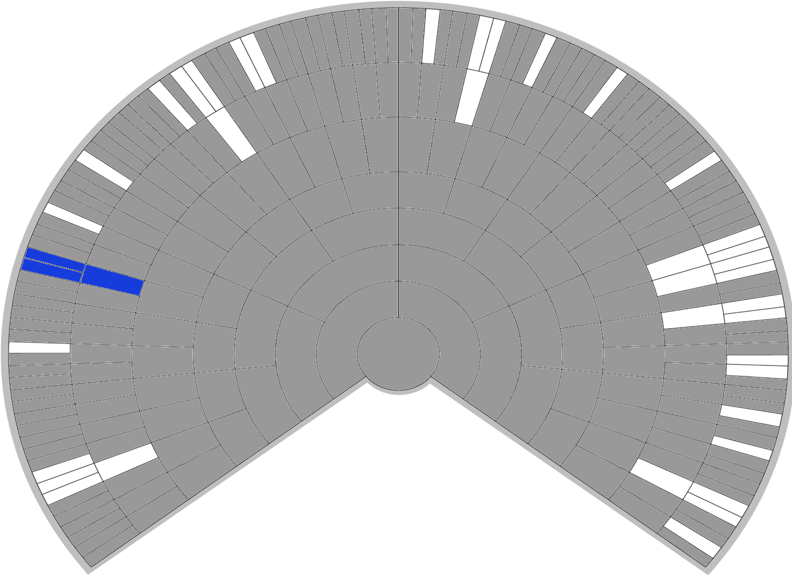
Over again, only to emphasize, this is a SAMPLE genetic family tree. No one has yet constructed a full genetic tree to this level of detail. So your non-DNA ancestors (the ancestors represented past white blocks) will vary!
This website uses cookies to ameliorate your experience. Click to Accept or Opt Out. AcceptReject Read More
Source: https://thegeneticgenealogist.com/2009/11/10/qa-everyone-has-two-family-trees-a-genealogical-tree-and-a-genetic-tree/
Posted by: hendersoneforgoorable.blogspot.com
0 Response to "What Is The Makeup Of A Family Tree"
Post a Comment